
AI Guest Follow-Up: How Churches Can Build Relationships Beyond Sunday Morning
Maria visited your church for the first time last Sunday. She filled out a connection card, smiled through the whole service, and then — nothing. No text. No email. No follow-up. Three weeks later, she’s visiting a church down the street.
Sunday Is Only the Beginning
A first visit to a church can be a significant moment. Someone walks through the doors. They experience worship. They hear the message. They meet people.
But what happens after Sunday? For many churches, this is where the biggest opportunity exists.
The Follow-Up Challenge
Most churches want to follow up with guests. The challenge is consistency.
A guest fills out a connection card. Someone intends to send a message. Someone plans to reach out. But ministry leaders are busy. The week gets full. The follow-up gets delayed. And sometimes, people who were looking for connection quietly disappear.
Relationships Require Intentional Systems
A follow-up system does not replace personal relationships. It creates opportunities for relationships to begin.
Automation helps churches make sure people receive timely communication while leaders focus on personal connection.
Creating Personalized Guest Journeys
Imagine a first-time guest experience:
A message goes out right away.
“Thank you for worshiping with us today. We are grateful you were here.”A gentle nudge toward the next step.
“We would love to help you take your next step and get connected.”Information about groups, serving opportunities, upcoming events, and ways to connect.
Beyond Guests: Communication Pathways for Every Person
Churches can create customized communication journeys for more than just first-time guests:
Every person is at a different place in their journey. Communication should reflect that.
How AI Helps Churches Create Better Connection
AI-powered communication tools can help churches:
- Build automated workflows
- Create personalized messages
- Generate communication content
- Schedule follow-ups
- Improve engagement over time
The goal is not sending more messages. The goal is making sure people do not fall through the cracks.
Shofar: Helping Churches Build Communication Systems That Care
Shofar combines AI-generated communication with customizable automation workflows. Churches can create automated texts, email journeys, guest follow-up sequences, and ministry communication workflows.
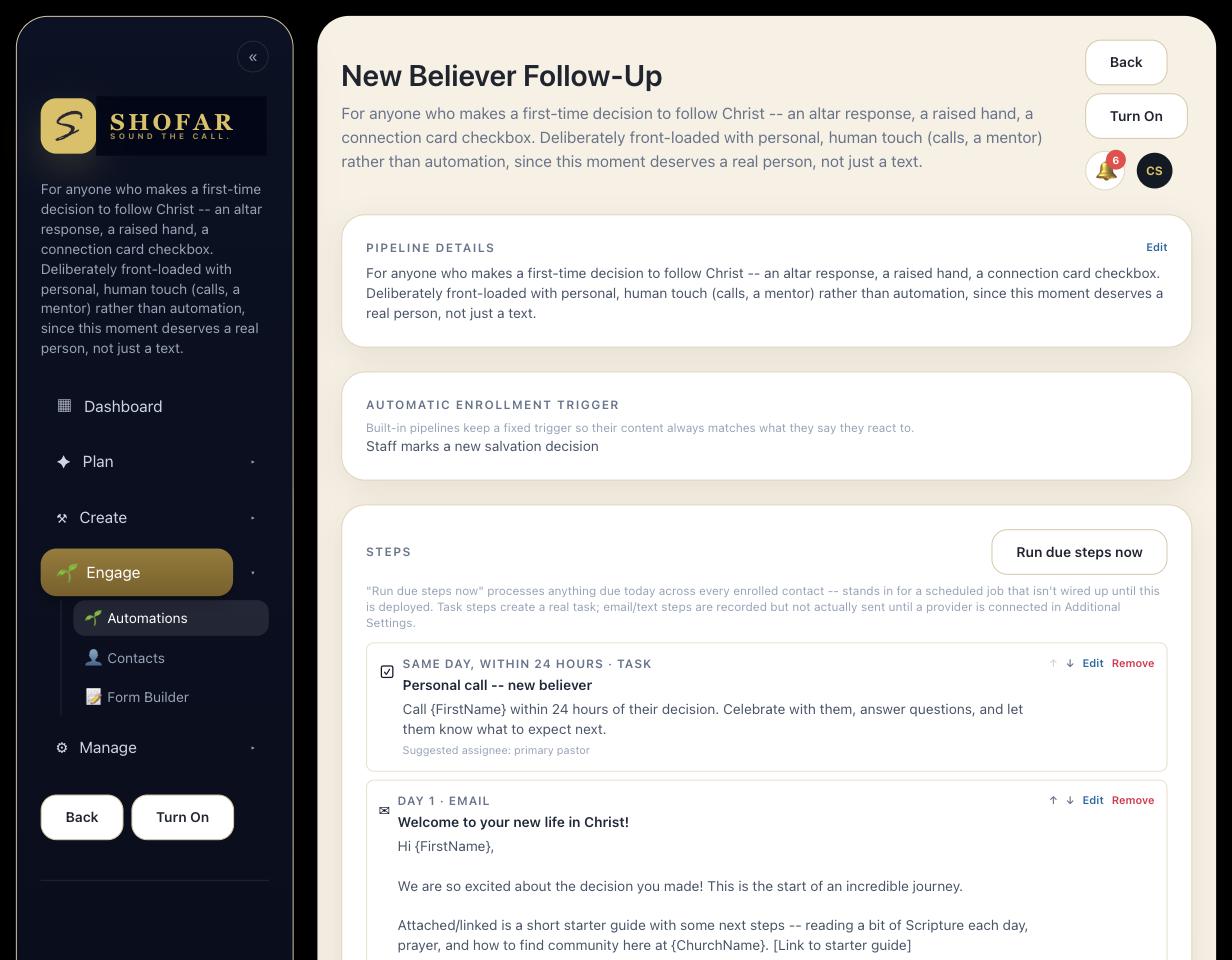
Over time, Shofar helps churches refine their communication by learning what messaging connects with their people. AI handles the repetition. Church leaders provide the relationship.
AI handles the repetition. Church leaders provide the relationship.
The Future of Church Connection
People do not want to feel like a number. They want to feel known.
Technology cannot replace relationships. But the right technology can help churches create more opportunities for relationships to happen.
The future of church communication is personal, intentional, and organized — and it’s available today.
Frequently Asked Questions
Why do church guest follow-up systems fail?
Does automated follow-up feel impersonal to guests?
Who can churches build follow-up journeys for besides first-time guests?
Ready to see it for your church?
Start your 14-day free trial today and see what Shofar can do for your church this Sunday.
- 14-day free trial, card required to start
- Hands-on support from our team while you get set up
- Cancel anytime — no long-term contract