
From One Event to an Entire Communication Strategy: How AI Helps Churches Maximize Every Ministry Moment
Community Serve Day is set. The date’s on the calendar, the sign-up sheet is ready, the t-shirts are ordered. There’s just one problem: nobody’s told anyone yet.
Your Church Plans the Event. But Who Communicates It?
Every church has moments that matter. A worship night. A community outreach. A discipleship class. A men’s event. A children’s ministry launch. A missions opportunity.
Months of planning go into creating these moments. But often, the biggest challenge is not creating the event. It is making sure people know about it.
The Traditional Church Communication Process
A ministry leader says: “We have an event coming up.”
Then someone has to start creating everything needed to promote it. They need:
- A title
- A description
- An email
- A subject line
- Social media captions
- Text reminders
- Website copy
- Volunteer communication
For someone already balancing ministry responsibilities, this can become overwhelming. Communication becomes reactive instead of strategic.
Communication becomes reactive instead of strategic.
What If One Idea Could Become Multiple Communication Pieces?
This is where AI changes the workflow. Instead of starting from scratch every time, AI can help churches expand one ministry idea into a complete communication plan.
Take a simple example. A church enters:
“Community Serve Day — September 6. Members will serve local organizations and invite neighbors to join.”
From that single line, AI can help create:
Email Communication
Subject lines, preview text, full email copy, and a clear call to action.
Text Messages
Short, clear reminders written for mobile — no scrolling required.
Social Media Content
Announcement posts, reminder posts, countdown content, and engagement-focused captions.
Follow-Up Communication
Thank-you messages, celebration updates, and next-step opportunities after the event.
Communication Should Not Be a Last-Minute Task
Great communication is not simply telling people what is happening. Great communication helps people understand why it matters.
When churches communicate intentionally, people are more likely to:
Communication is not just information. Communication creates connection.
How Shofar Helps Churches Communicate Better
Shofar was designed to help churches move from scattered communication to intentional communication. Instead of managing dozens of disconnected tasks, churches can create communication workflows that help them plan ahead, generate content, schedule messages, and reach people through multiple channels.
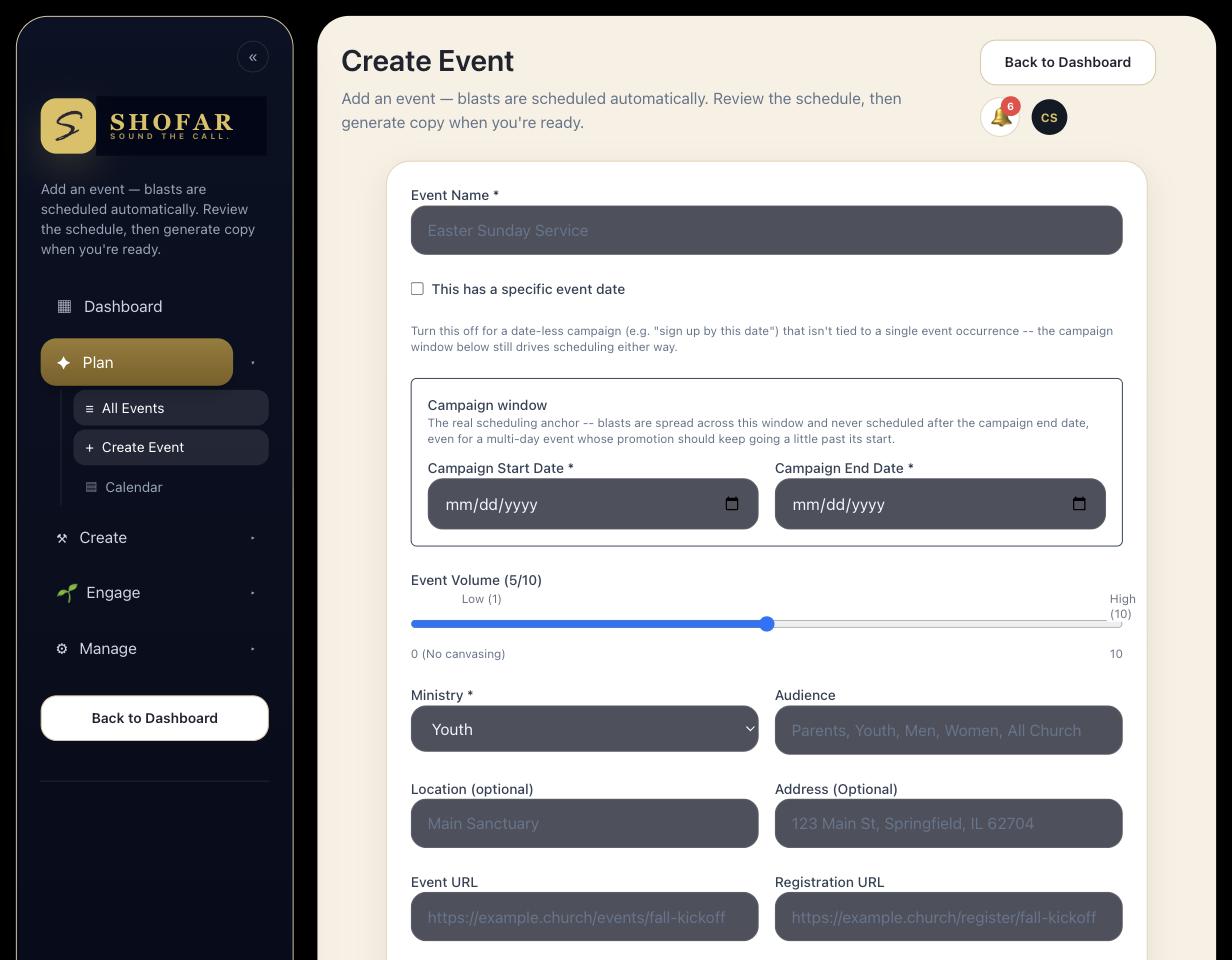
Shofar combines AI-powered content creation with communication automation, so churches can spend less time managing messages and more time ministering to people.
The Opportunity Ahead
Every church has moments that deserve attention. Every ministry has people who need to hear about it. AI helps churches make sure those moments do not get lost — and they’re available today.
Frequently Asked Questions
How much time does AI actually save when promoting a church event?
Can I still edit what AI writes for my church?
What channels can one event’s communication cover?
Ready to see it for your church?
Start your 14-day free trial today and see what Shofar can do for your church this Sunday.
- 14-day free trial, card required to start
- Hands-on support from our team while you get set up
- Cancel anytime — no long-term contract